
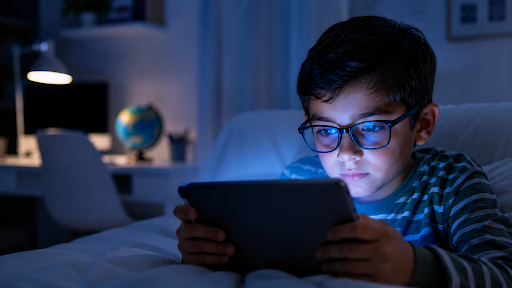
Tablets, laptops, and phones are now part of homework, entertainment, and keeping in touch. It is understandable that parents worry about what hours of screen use might be doing to developing eyes. The reassuring point is that current evidence does not show that ordinary screen light causes permanent eye damage. Good Children Eye Care is less about fearing one color of light and more about managing close-up work, breaks, sleep and regular sight tests.
What Is Blue Light?
Blue light is part of the visible light spectrum. Sunlight is its strongest everyday source, although phones, televisions, tablets and LED lighting also produce it.
The phrase blue light exposure is often used as though it automatically means harm. Current guidance from UK optical organisations does not support claims that blue light from screens damages the eyes. That distinction matters because alarming claims can distract families from the screen-related issues children are more likely to experience.
Why Screens Can Still Make Young Eyes Uncomfortable
Screens may not be burning or permanently damaging the eyes, but long periods of close focus can still feel tiring. Children can become absorbed in a game, lesson or video and may forget to look away, change position or blink normally.
Recognising Digital Eye Strain
Common signs of screen time eye strain can include tired or sore eyes, temporary blurred vision, headaches and difficulty refocusing after close work. Reduced blinking may also leave the eyes feeling dry or irritated. These symptoms are often temporary, but recurring discomfort deserves attention rather than being dismissed as an unavoidable part of schoolwork.
When Children Do Not Mention a Problem
Young children may assume that everyone sees as they do. Possible digital eye fatigue in kids may show up as rubbing the eyes, avoiding close tasks, losing their place while reading, or becoming irritable after screen use. These signs can have several explanations, so an optometrist can help assess what is happening.
Practical Ways to Make Screen Use More Comfortable
Parents do not need to remove every device from family life. Small changes to the setup and the way screens are used can make close work more comfortable.
Useful healthy screen habits include:
- Encourage a 20-second distance break every 20 minutes
- Keep screens at a comfortable distance rather than close to the face
- Adjust text size so children are not squinting or leaning forwards
- Reduce reflections and match screen brightness to the room
- Remind children to blink and change position regularly
- Put devices away before bedtime
The 20-20-20 approach means looking about 20 feet away for at least 20 seconds every 20 minutes. Longer breaks for movement and play are still important during extended screen sessions.
Screens, Sleep and Evening Routines
Using an exciting device near bedtime can make it harder for a child to wind down. Evening light may also influence the body clock, but blue light is not the only factor. Notifications, games, conversations and stimulating content can all delay sleep.
Night settings may reduce visible blue light, but they should not be treated as proven eye protection. Build a device-free period before bed and maintain a consistent bedtime routine.
Do Children Need Blue-Light Glasses?
There is currently no strong evidence that blue-blocking lenses prevent eye damage, relieve digital eye strain or preserve a child’s vision. A child reporting headaches, blur or discomfort needs an appropriate sight test, not an automatically selected coating.
Effective children’s vision protection starts with understanding the individual child. Correcting a genuine prescription, improving screen setup, taking breaks and following professional advice are more useful than assuming one product solves every screen-related concern.
Remember Outdoor Time and Regular Eye Tests
Screen use can replace time outdoors, and that wider balance matters. Evidence suggests that regular outdoor activity may help reduce the likelihood of children becoming short-sighted while giving their eyes a break from close work.
Children may not recognize or explain a change in their sight. NHS eye tests are available without charge for children under 16 and for young people under 19 who are in full-time education. Parents should arrange an examination if they notice persistent squinting, headaches, sitting unusually close to screens, closing one eye, difficulty reading or a change in school performance.
Supporting Your Child’s Eyes with Optica Eye Clinic
Optica Eye Clinic provides NHS and private eye examinations for children at its Forest Hall, Wallsend, Jarrow, Blyth and Doxford Park practices. Its website explains that children’s examinations can use pictures instead of letters, so a child does not need to be able to read before having their vision assessed.
Regular Children Eye Care gives parents a clearer understanding of their child’s sight instead of leaving every concern to guesswork . If screen-related discomfort continues despite sensible breaks and adjustments, contact Optica Eye Clinic to arrange an appointment and discuss the symptoms with an optometrist.