
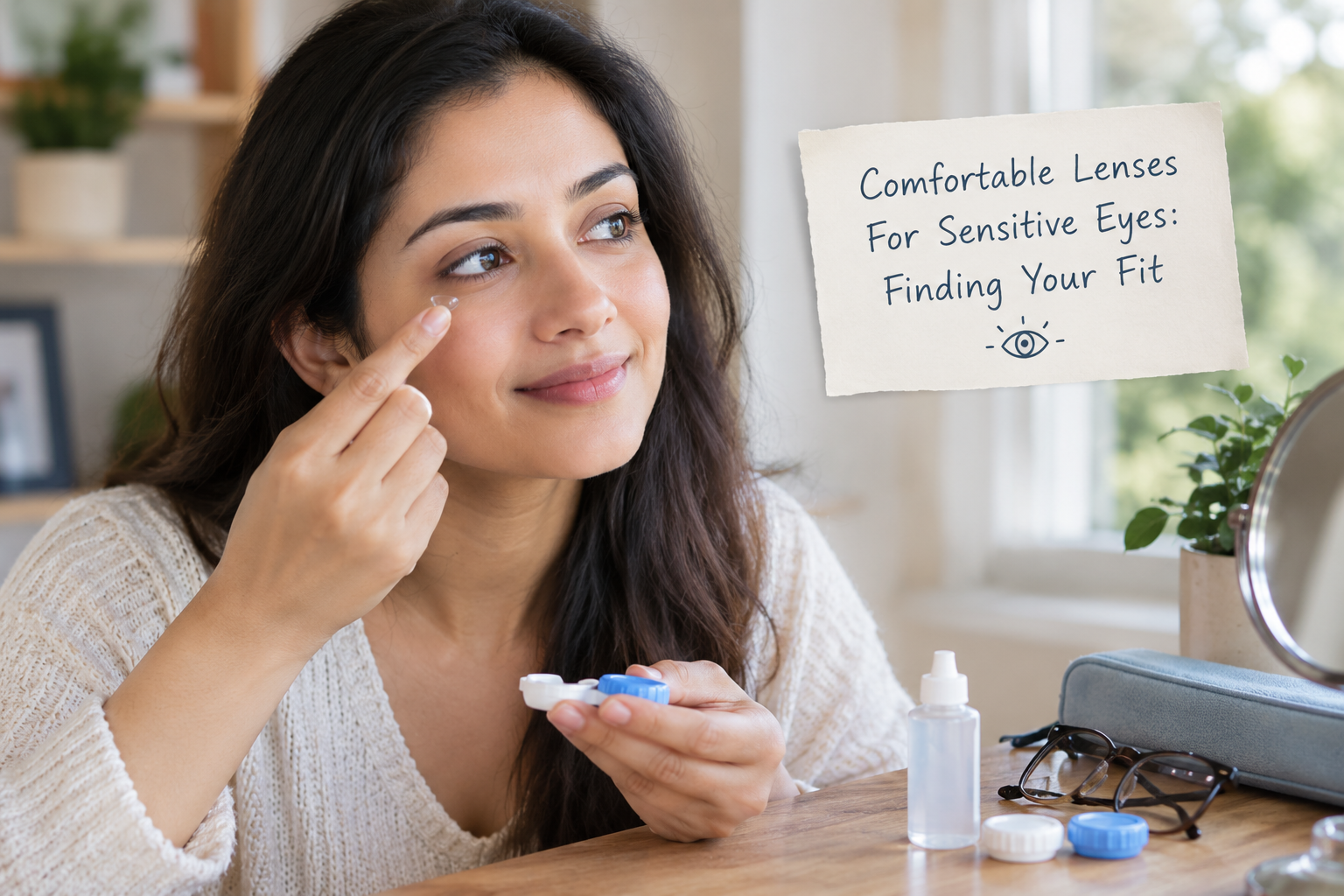
If your contact lenses feel dry, gritty or simply not quite right by the afternoon, you are not imagining it and you are certainly not alone. Discomfort like this can come from several different sources, and switching products at random rarely solves the problem. A proper assessment with an optometrist is usually a far more useful starting point than guesswork.
What Do People Mean by Sensitive Eyes?
People use the phrase loosely to describe dryness, watering, irritation, a lens that feels noticeable rather than invisible, or simply not being able to wear lenses for as long as they’d like. It is a helpful shorthand, not a medical diagnosis, and the underlying reason varies considerably from one person to the next.
Common Reasons Contact Lenses Feel Uncomfortable
Discomfort can relate to how well a lens fits, how it moves or sits on the eye, or wearing it for longer than advised. Replacing lenses later than recommended, inconsistent cleaning, or environmental dryness may also play a part. Long periods of screen use, cosmetic products, and general changes in the eyes over time can contribute too. Similar symptoms can stem from quite different causes, which is why self-diagnosis rarely helps.
Why a Professional Contact Lens Fitting Matters
An optometrist looks well beyond your prescription. A fitting typically involves checking eye health, taking corneal measurements, assessing your tear film, and observing how a lens positions and moves on the eye. Your lifestyle, wearing pattern and confidence handling lenses all factor into what gets recommended.
Finding a Lens Type That Suits Your Routine
What works for someone else may not suit you, since suitability depends on your prescription, eye health, how often you wear lenses, your work environment and daily activities. At Optica Eye Clinic, the team can talk through Comfortable Lenses For Sensitive Eyes based on an assessment rather than a product description alone, taking your handling preferences and findings from the fitting into account.
Daily Disposable and Reusable Lens Options
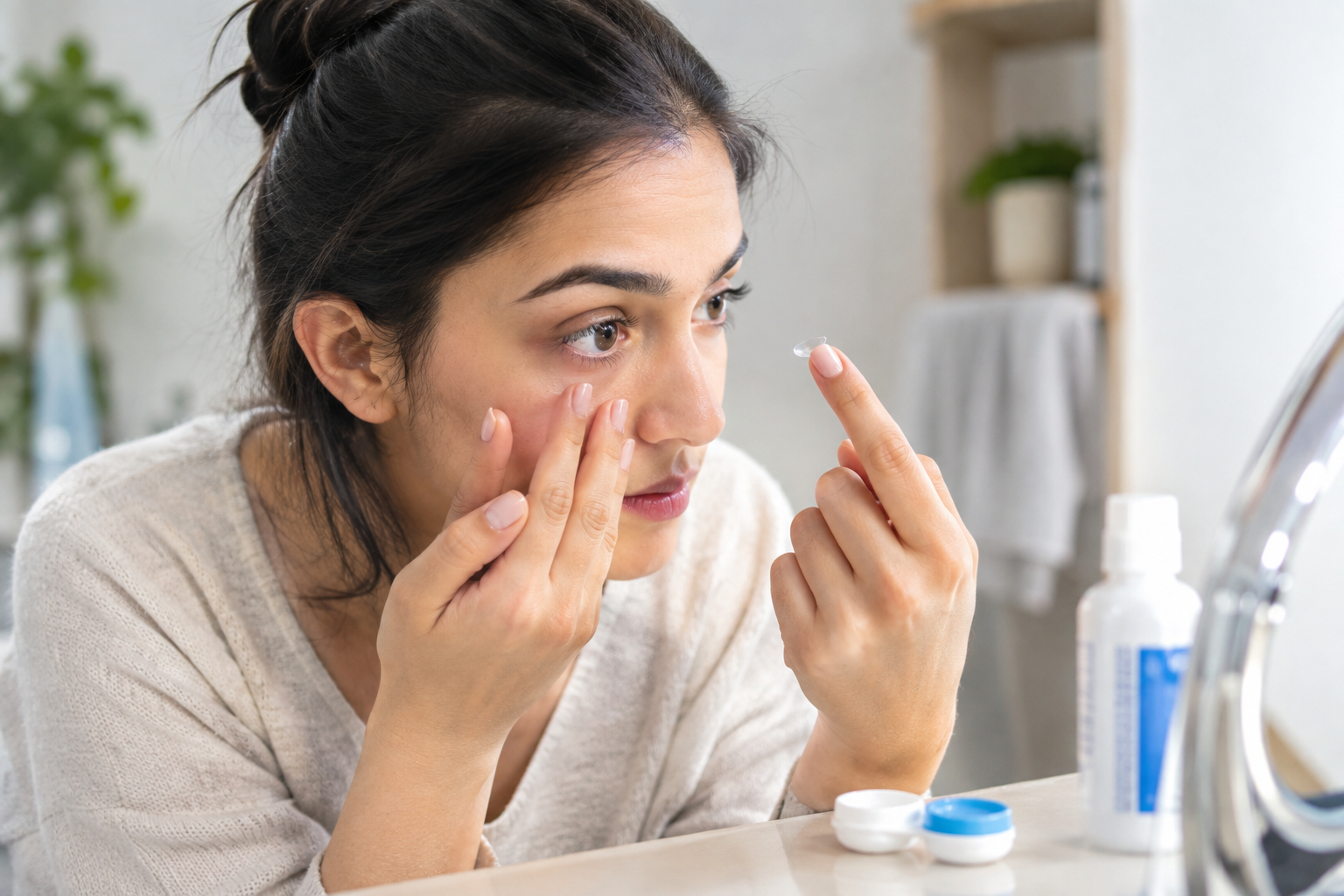
Daily disposable lenses are worn once and discarded, so there is no cleaning or storage involved. Reusable lenses need a consistent care routine, including proper disinfection and timely replacement. Neither option suits every wearer, and which one an optometrist suggests depends on your eyes and habits rather than convenience alone.
Lens Material Is Only Part of the Decision
Factors such as material, oxygen transmission, water content, edge design, diameter and base curve can all influence how a lens feels and performs. These specifications work together rather than in isolation, which is another reason a professional assessment carries more weight than choosing based on marketing terms.
Could Your Lens Solution Be Contributing?
If you wear reusable lenses, the solution you use matters as much as the lens itself. Changing products without advice is not something to do independently, since some solutions and lenses are matched for a reason. If comfort has changed, it is worth raising this at your next appointment rather than switching products yourself.
Everyday Habits That Support Comfortable Wear
A few habits genuinely help. Wash and dry your hands thoroughly before handling lenses, and stick to the replacement schedule you have been given. Keep lens cases clean and replace them as advised, avoid any water exposure, and do not wear lenses longer than recommended. Following your optometrist’s instructions and attending aftercare appointments both matter more than they might seem.
Contact Lenses and Screen-Heavy Routines
Concentrating on a screen for long stretches tends to reduce how often you blink, which can leave eyes feeling drier by the end of the day. Taking regular visual breaks and blinking consciously during screen work may help, though this does not mean screens cause lasting harm to the eyes.
Understanding NHS Contact Lens Services
Optica Eye Clinic provides NHS Contact Lens Fitting alongside private options for eligible patients, supporting the fitting process from assessment through to guidance on care. Not everyone qualifies for NHS-funded contact lens services, and coverage depends on individual circumstances rather than being automatic for all patients.
Confirming Eligibility with Optica Eye Clinic
Because eligibility varies, the most reliable step is to contact your preferred branch directly and ask about NHS Contact Lens Fitting, current appointment availability, and any costs that may apply to your situation.
When Discomfort Needs Prompt Attention
Mild awareness of a lens is one thing, but some symptoms need swift action. Remove your lenses and seek prompt professional help if you experience pain, marked redness, sensitivity to light, discharge, or a sudden change in vision. Do not wait to see if these settle on their own.
Contact Lens Support Across the North East
Optica Eye Clinic has practices in Forest Hall, Wallsend, Jarrow, Blyth and Doxford Park. Not every lens type or fitting service is necessarily available at every branch, so it is worth checking with your chosen practice before booking.
Finding a Suitable and Comfortable Fit
Getting contact lenses to feel right is rarely about finding one perfect product. It comes down to a proper assessment, an appropriate fit, realistic wearing habits, sensible care, and following up when something changes. If your lenses have been causing trouble, arranging Comfortable Lenses For Sensitive Eyes starts with booking a contact lens assessment at Optica Eye Clinic, where the team can look at what is actually going on and guide you toward something better suited to your eyes.