
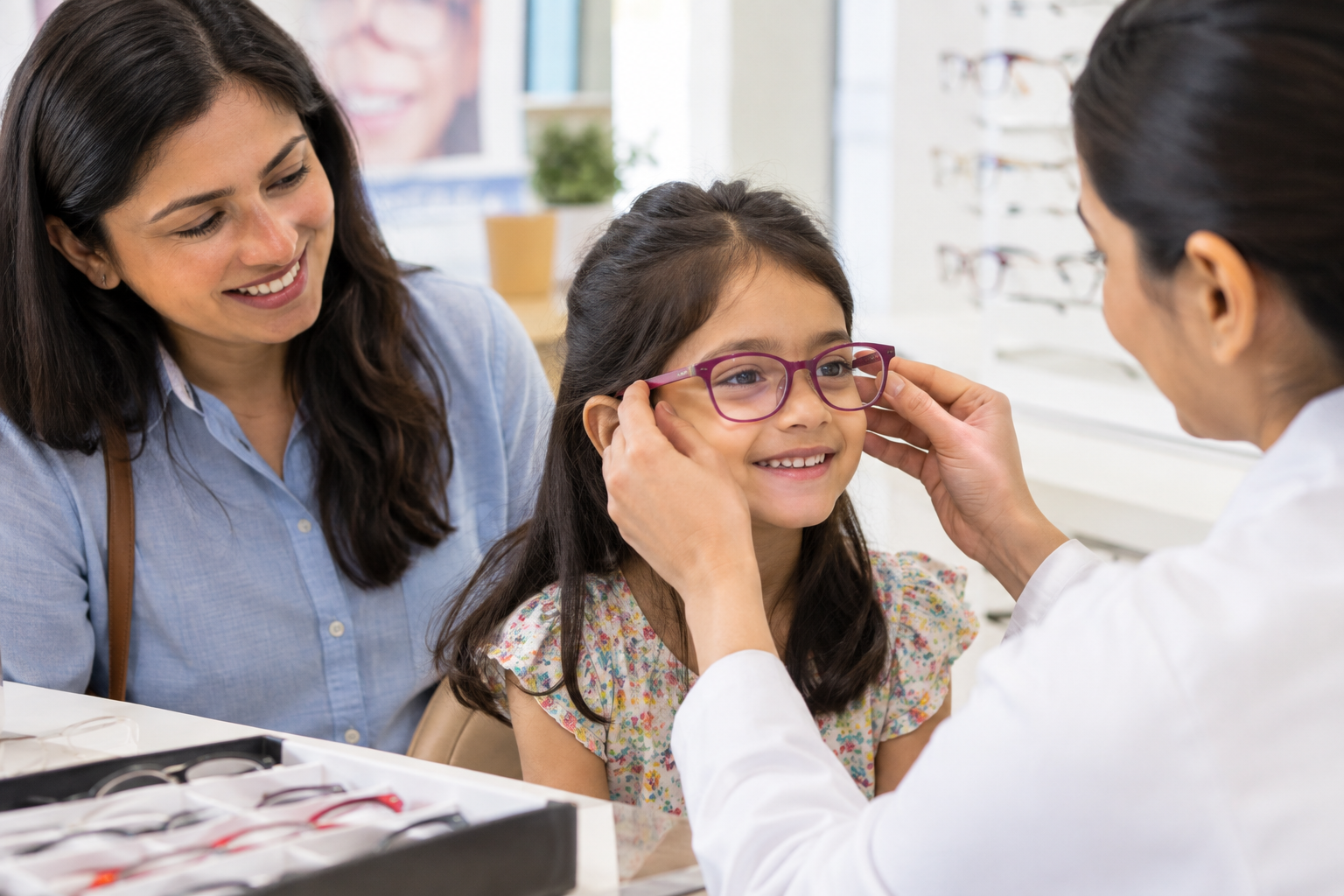
Good vision shapes how a child learns and plays. Many parents only think about eye health when something seems wrong, yet Children Eye Care works best as an ongoing habit. Regular check-ups, sensible habits, and glasses that fit make a real difference to a child’s comfort. This guide covers routine testing, signs worth mentioning to an optometrist, and choosing frames for a growing child.
Why Regular Children’s Sight Tests Matter
Children rarely announce that their vision has changed. A young child has nothing to compare their sight against, so blurred vision can feel normal. A sight test isn’t just reading a chart. It’s a chance for an optometrist to check how the eyes focus, using methods designed for young patients.
How Often Should Children Have Their Eyes Tested?
NHS guidance points to an eye test roughly once a year for most children, though an optometrist may suggest a shorter interval based on prescription, family history, or previous symptoms. Some children with no concerns may be reviewed every two years instead. There isn’t a single schedule for every child, which is why the recommendation comes from the professional carrying out the examination.
Signs Your Child May Need an Earlier Appointment
Between appointments, certain behaviours are worth mentioning to an optometrist: frequent squinting, sitting close to screens, holding books very near the face, rubbing the eyes, regular headaches, closing one eye, a head tilt, or struggling to see the whiteboard. None of these confirm a condition on their own. They’re reasons to book a check sooner, so a professional can take a proper look.
Everyday Habits That Support Children’s Eye Health
A few everyday habits support comfortable vision year-round: time outdoors, giving the eyes a break from close-up focus; a balanced screen routine with pauses to look further away; good lighting for reading; and following an optometrist’s guidance.
What Happens During a Children’s Eye Examination?
Optica Eye Clinic’s Children Eye Care examinations use pictures and symbols rather than letters, so a child who isn’t reading yet can still take part fully. The team uses equipment such as a retinoscope to find an accurate prescription while checking general eye health, in an unhurried, friendly way.
Choosing Glasses for a Growing Face
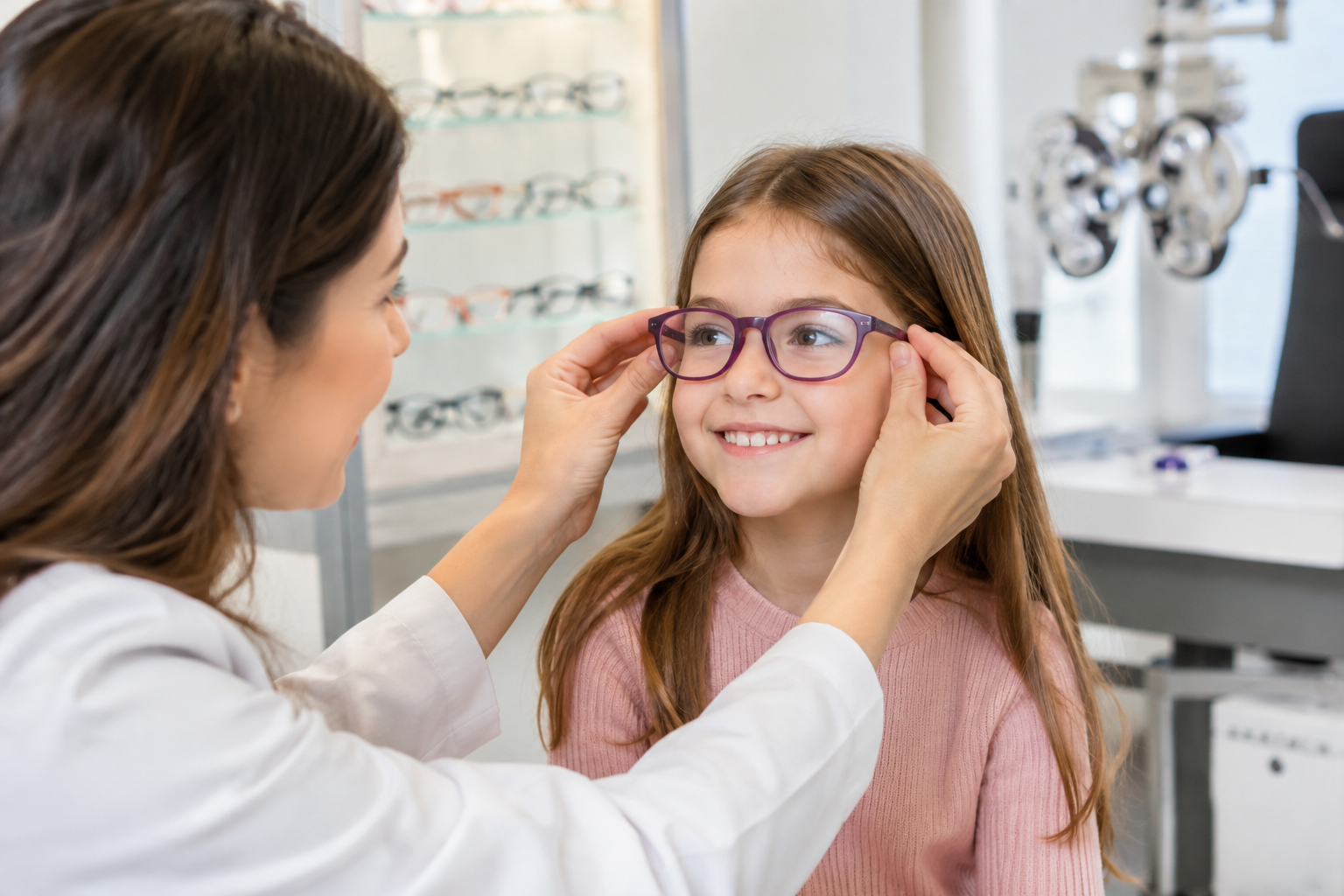
A child’s face changes shape quickly, so it helps to have them present when choosing and collecting glasses. Frame width should sit comfortably without pressing at the temples. The bridge needs to rest on the nose without slipping, and the temple arms should reach behind the ears with a gentle curve. The eyes should sit centrally within the lenses, and a professional adjustment at collection makes a real difference.
Comfort Comes Before Fashion
Once new glasses come home, check for a few things. Do they slip down the nose during play, or pinch at the sides of the head? Is there pressure behind the ears, or soreness on the bridge? Does your child keep looking over the top of the lenses? A frame can look wonderful and still need adjusting, so fashionable choices still have to suit the prescription and face shape underneath.
Durability for School, Play, and Daily Life
School days involve a lot of movement, so lightweight construction and secure hinges make everyday wear easier. Encouraging children to use both hands when removing glasses, and to store them in a case, helps them last through active days. No frame is unbreakable, but sensible handling habits go a long way.
Let Your Child Join the Decision
Involving a child in choosing frames, from a manageable selection that already suits their prescription and face shape, gives them a genuine sense of ownership. Letting them pick a colour they like doesn’t guarantee they’ll wear their glasses, but it makes the choice feel theirs.
What Defines the Right Pair of Children’s Glasses?
There isn’t one universal answer to which frame counts as the Best Kids Glasses for every child. The right pair depends on how well it suits the prescription, how comfortably it fits the face, lifestyle, accurate measurements, personal preference, and budget, not a brand name or online ranking.
NHS Sight Tests, Vouchers, and Optica’s Free Frames
Children under 16 in the UK are entitled to NHS-funded sight tests, and where glasses are needed, the government provides a voucher towards frames and lenses. At Optica Eye Clinic, plastic and metal children’s frames are supplied free with an eligible voucher, with styles regularly updated. Voucher values can vary, so check with your branch about current eligibility beforehand.
Children’s Eye Care Across the North East
Optica Eye Clinic has practices in Forest Hall, Wallsend, Jarrow, Blyth, and Doxford Park, offering NHS and private children’s examinations alongside a frame selection. Stock and styles can differ slightly between branches, so check with your local practice before visiting.
Children Eye Care
Looking after a child’s eyesight isn’t a single appointment to tick off. It’s routine sight tests, prompt attention when something seems different, sensible habits, and glasses that genuinely fit as your child grows. Thoughtful Children Eye Care brings all of this together, giving your child a more comfortable start to school and play. If it’s time for a check-up or new frames, get in touch with your nearest Optica Eye Clinic branch or book online today.