
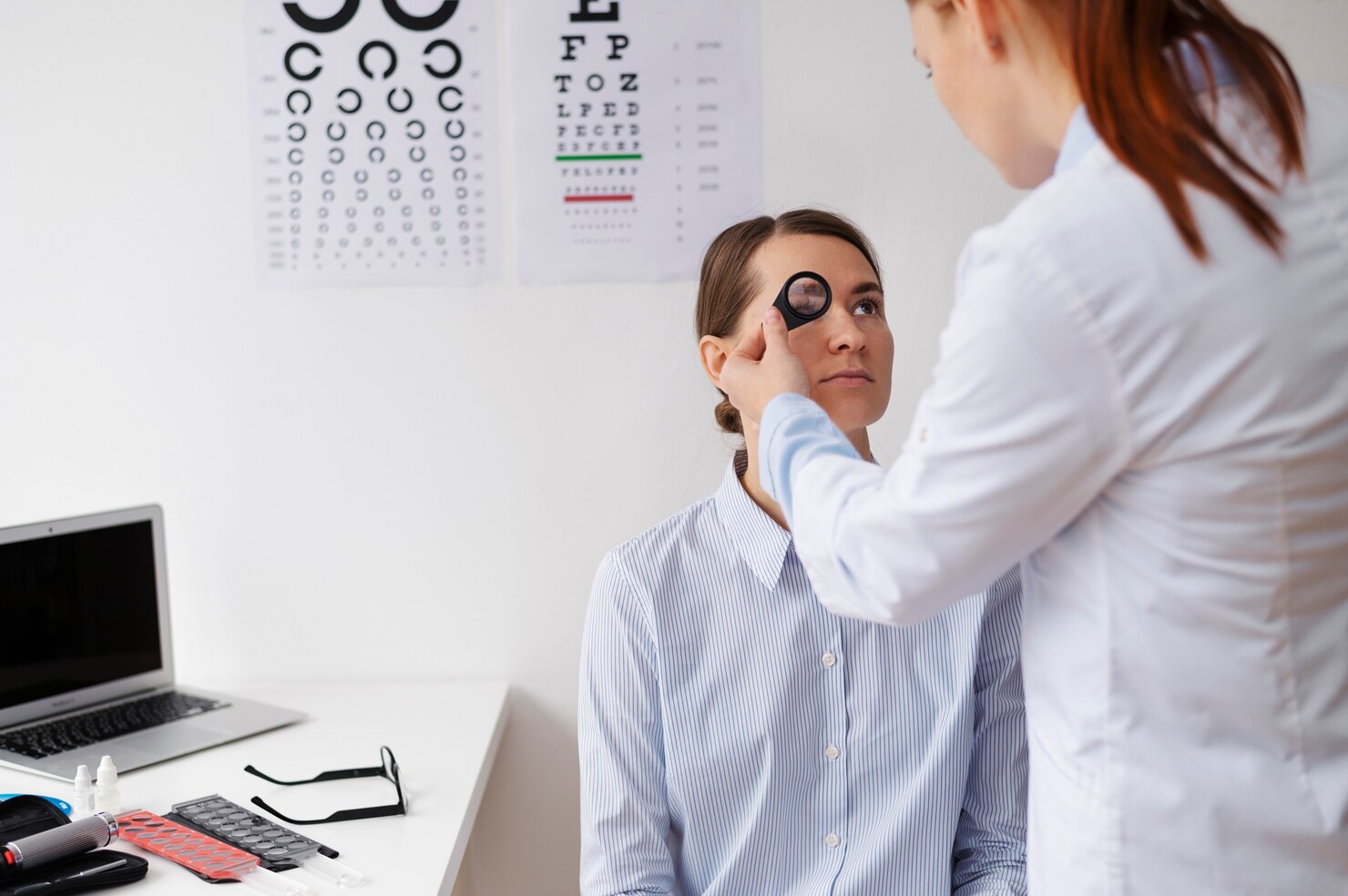
Seeing clearly does not always mean that nothing has changed. Some eyesight and eye-health problems develop gradually, allowing people to adapt without realising that their vision is different. A regular Local Eye Exam can help identify these changes earlier, update an outdated prescription, and highlight signs that may need monitoring or referral. It is a practical part of looking after your health, whether or not you currently wear glasses.
An Eye Examination Checks More Than Your Prescription
Reading letters from a chart is only one part of an eye examination. An optometrist can try to understand how clearly each eye sees, how the eyes focus and cooperate together, and also whether a prescription you already have is still fitting. The tests chosen may shift, depending on your age, what symptoms you’re feeling, your medical background, and what the optometrist decides clinically.
A comprehensive eye examination also considers the health of the eyes. Optometrists are trained to recognize abnormalities, including possible local eye exams or glaucoma, and can explain whether further investigation is appropriate. An examination cannot identify every condition or guarantee that a future problem will not occur, but it provides useful information based on what is observed at that appointment.
Why Early Changes Can Be Easy to Miss
Eyesight often changes slowly rather than overnight. When the difference is small, everyday adjustments such as holding a menu farther away, increasing screen brightness, or sitting closer to the television can become habits before the person recognises a problem.
Gradual Changes in Eyesight
A routine eyesight test may reveal that one eye has changed more than the other or that close-up tasks now require greater effort. An updated prescription may improve comfort and clarity when appropriate. However, headaches, tired eyes, and blurred vision can have different causes, so these symptoms should be discussed rather than self-diagnosed.
Eye Conditions Without Obvious Early Symptoms
Certain eye conditions may not cause pain or noticeable symptoms during their early stages. A professional vision assessment gives the optometrist an opportunity to consider both visual performance and visible aspects of eye health. If something unusual is found, the next step may involve closer monitoring, additional assessment or referral to another healthcare professional.
What Happens During an Eye Examination?
An appointment will usually kick off with questions about your eyesight, current glasses or contact lenses, your general health, medicines, and any relevant family history. This context helps the optometrist decide which tests are suitable , rather than just using the identical routine for everyone.
In terms of eye health screening, the optometrist may check how sharp your vision is, see whether corrective lenses are needed, and examine different parts of the eye using the right equipment. Some people might need extra checks depending on what’s going on for them. It can help to bring your latest glasses, the details of your medication , and also any questions you have about changes you’ve noticed lately.
How Often Should You Have Your Eyes Tested?
The NHS recommends having an eye test every two years. Your optometrist may advise a shorter interval based on age, eye health, medical history, family history, or previous findings. You should not wait for the next scheduled examination if your sight changes or you develop new concerns.
People who may need personalized advice include the following:
- Children
- Adults aged over 70
- People with diabetes
- People with a family history of glaucoma
- Anyone noticing changes in their vision
Eligibility for an NHS-funded sight test follows specific criteria, so patients should check current NHS guidance or ask the practice rather than assuming that every examination is free.
Signs You Should Book Earlier
Consider arranging a local optometrist appointment if you notice persistent blurred vision, difficulty reading, increased eye strain, problems seeing at night, or a change in how your existing glasses perform. These symptoms do not automatically indicate a serious condition, but an optometrist can assess them properly and advise on an appropriate next step.
Sudden loss of sight, severe eye pain, new flashes, or a sudden increase in floaters or a curtain-like shadow across your vision requires urgent professional advice. These symptoms should not wait for a routine appointment. Contact an urgent eye-care service, NHS 111 or emergency care as appropriate.
Making Eye Care Part of Your Routine
Regular examinations create a record that can help an optometrist compare findings over time. They also give you space to discuss changing visual demands, whether that involves driving, reading, screen use, work or hobbies. The purpose is not to create unnecessary worry, but to make informed decisions before a minor, gradual change begins interfering with daily life.
Optica Eye Clinic is a family-run independent group established in 2001. It offers NHS and private eye examinations at practices in Blyth, Forest Hall, Wallsend, Jarrow and Doxford Park, alongside a home-visit service for eligible people who cannot access a practice. You can arrange a Local Eye Exam with the clinic to discuss your vision, current concerns and the examination interval appropriate for you.